
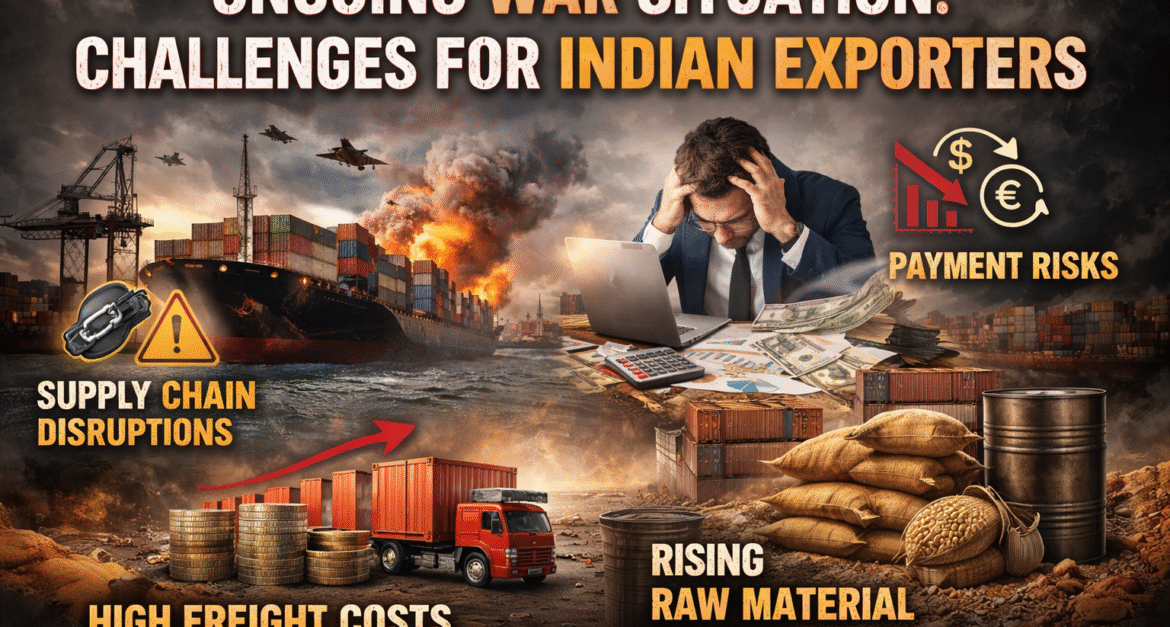
1. Supply Chain Disruptions in Global Trade
War directly impacts international logistics and trade routes. Many key shipping lanes are either blocked, restricted, or considered high-risk zones. This results in:
- Delayed shipments
- Increased transit times
- Sudden route diversions
- Higher insurance premiums
Exporters from India are facing difficulties in delivering goods on time, affecting long-term buyer relationships.
2. Rising Freight Costs and Container Shortage
One of the biggest challenges exporters face today is the increase in freight rates. Shipping companies are charging higher prices due to:
- Fuel price hikes
- Risk surcharges
- Limited vessel availability
Container shortages have also become a major issue, making it difficult for exporters to secure bookings. This directly impacts export businesses working on tight margins.
3. Payment Risks and Currency Fluctuations
War situations create instability in the global financial system. Exporters are experiencing:
- Delayed international payments
- Banking restrictions and sanctions
- Currency exchange fluctuations
Many exporters now prefer advance payments or LC (Letter of Credit) to reduce financial risk.
4. Increase in Raw Material and Production Costs
The cost of raw materials, packaging, and transportation has increased significantly. This is especially affecting FMCG exporters dealing in food products, spices, and daily-use goods.
Higher fuel prices and supply shortages are pushing production costs up, forcing exporters to either increase prices or reduce profit margins.
5. Reduced Demand and Market Uncertainty
Due to economic instability caused by war, global buyers are becoming more cautious. This leads to:
- Smaller order quantities
- Delayed purchase decisions
- Increased price negotiations
Importers are also shifting to local suppliers to avoid international risks, increasing competition for exporters.
6. Strategies for Exporters to Survive During War Crisis
Despite these challenges, exporters can adopt smart strategies to sustain and grow:
Diversify Export Markets
Avoid dependency on a single country. Explore new and emerging markets in Africa, Southeast Asia, and the Middle East.
Secure Payment Terms
Work with safe payment methods like:
- Advance payments
- Letters of Credit (LC)
- Export credit insurance
Build Strong Logistics Network
Partner with multiple freight forwarders and shipping lines to reduce dependency and ensure flexibility.
Price Risk Management
Regularly update pricing based on freight and raw material costs to avoid losses.
Focus on Long-Term Buyer Relationships
Transparent communication and timely updates help build trust with international buyers.
7. Opportunities for Indian Exporters
Even in crisis, there are opportunities. Indian exporters have a strong advantage in:
- Competitive pricing
- High-quality FMCG products
- Strong manufacturing base
Exporters dealing in pulses, spices, and ready-to-eat products can still capture global demand by adapting quickly to market changes.